logo

A Diplomatic Brou-ha-ha!

 Welcome to William’s World! 

We often spend so much time focusing on William Penn’s own life that we forget there was an entire WORLD of dramatic events and intrigues happening all around him!!  William’s World, our new monthly featurette, will focus on the people, places, inventions, and ideas of the Early Modern Period.

Scene:  London, England

Date: 30 September 1661

Where’s William?  An almost 17 year old William Penn is studying at Christ Church College, Oxford, roughly 50 miles up the Thames River from London.

Background: The Restoration of Charles II in 1660 has brought changes to the population of London.  The returning Royalists supplant the Cromwellian Puritans, the Church of England’s Anglicism is restored over the Protectorate’s Presbyterianism, and continental European rulers are establishing embassies in the English Capitol.  An arriving ambassador is received with great pomp and ceremony, not only by Charles II, but also by fellow ambassadors already in London.  Such is the case when Sweden’s Ambassador Brahe arrives by barge at the Tower of London.  They planned for Brahe to enter an official state carriage and proceed to the palace at Whitehall for a formal presentation to the king.  Other ambassadors follow behind in their own elaborate carriages, following an order of precedence determined by the nominal founding of the various royal houses in Europe. 

“The Arrival of King Charles I of England in Rotterdam” by Lieve Verschuier
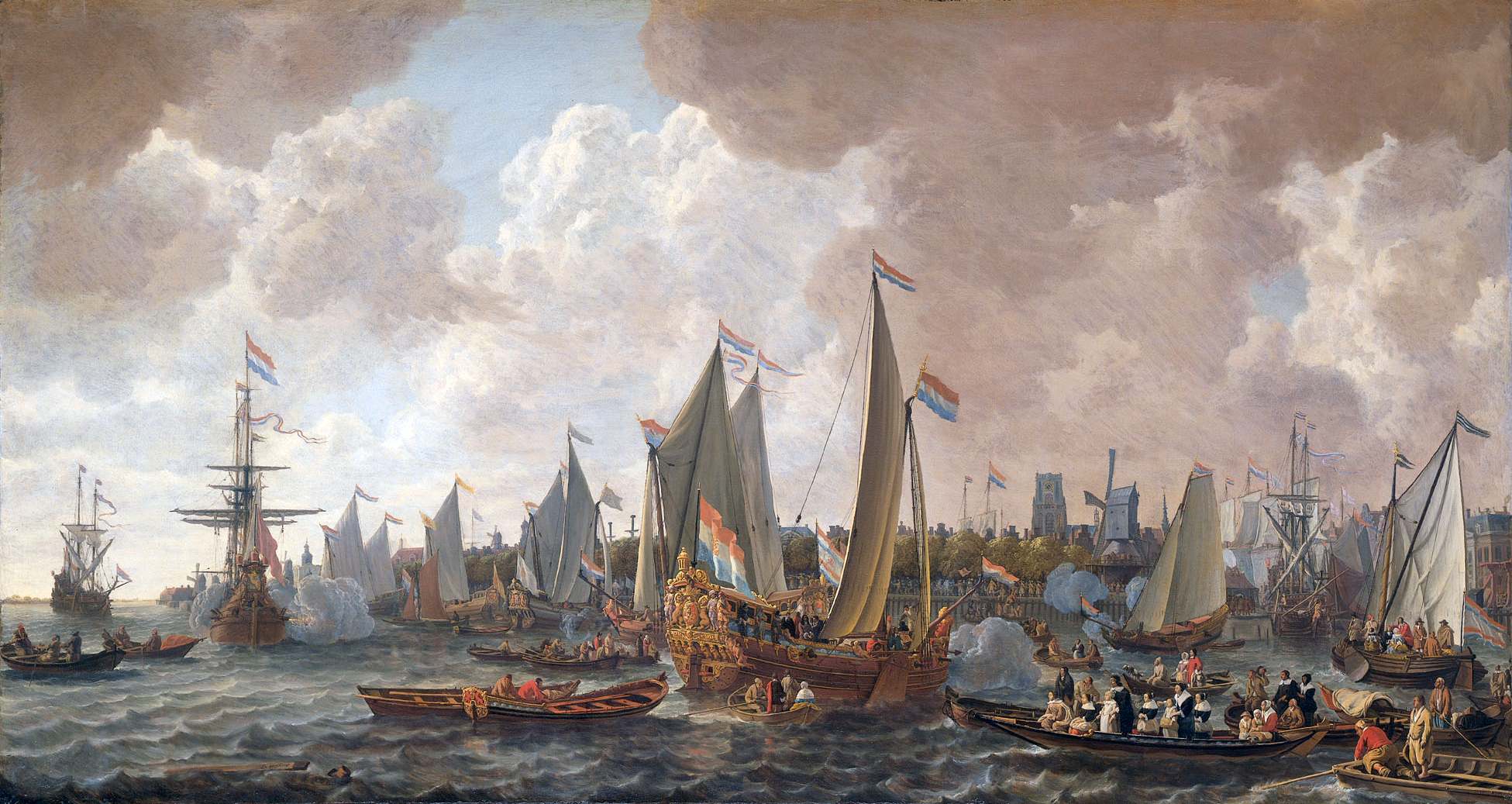
The Main Event: Now it just so happens that both France and Spain are claiming to have the highest rank among European states, and both are planning to be in the Swedish ambassadors’ procession, and their embassies are across the street from each other.  Charles has asked them both not to participate, and in learning of their decisions, instructs that no Englishman is to participate or meddle in the dispute.  English soldiers are called in under arms, and London’s Trained Bands (an efficient group of militia) were also on duty as well.

By the early afternoon, both the French and Spanish had arranged their carriages and retinues for the procession.  The French contingent numbered some 150, the Spanish around 40 or so. An eyewitness to the proceedings, Samuel Pepys observed, “…great preparations on both sides; but the French made the most noise and vaunted most, the other made no stir almost at all…”, then, in spite of all this activity, goes off to lunch. 

While he dined, the two groups began to make their way toward the Tower, as their embassies are some distance away.  At some point in the journey, most likely after arriving at the landing, the French and Spanish began a running battle along London’s crowded streets.  They head North-East, over Tower Hill, toward Crutched Friars near Aldgate.  There, the Spanish stalled the French by killing and cutting the harnesses of a number of horses pulling the French coach, leaving it unable to move.  In the process, at least 6 Frenchmen were killed and 33 wounded.  The Spanish attempted to avoid similar destruction by assigning individual guards for each Spanish horse and coachman and reinforcing their horses’ harnesses with chains.  However, one or two men of their party were still killed, and several more wounded.  Additionally, one English soldier somewhere along the route was killed, most likely by a French firearm, as the Spanish were reported to be armed only with swords.

Alfred Barron Clay’s 19th-century depiction of Charles II entering London

Our eyewitness describes the success of the Spanish, as their coach “…is gone through the City next to our King’s coach.  At which it is strange to see how the City did rejoice.  And endeed, we do naturally all love the Spanish and hate the French.”  He also witnesses the ending, as he recalls:

…I run after them with my boy after me, through all the dirt and the streets full of people; till at last at the mewes [Royal Mews at Charing Cross, some miles away from the scene of battle] I saw the Spanish coach go, with 50 drawne swords at least to guard it and our soldiers shouting for joy.  And so I fallowed the coach, and then met it at Yorke-house, where the Embassador lies; and there it went with great state.                                                                          

A victory, it would seem, for the Spanish, and the London population which seemed to prefer them over the French.  

The Outcome:   It seems likely that news of such an event would have spread quickly around the London area, given the number of casualties (likely over 50) and the success of the English favorites.  It is probable that William Penn would have heard the tale, given that his father was close friends and neighbors with our eyewitness, Samuel Pepys, whom he also worked with at the Navy Office.  Indeed, a few days later Pepys and Sir William Penn met a Monsieur Eschar, who complained that the English actually assisted the Spanish, and that the French Ambassador would leave England unless King Charles acted against the Spanish and the participating English.  Pepys observed the threat and, on the Ambassador leaving, noted that, “… I and all that I meet with, all are very glad of.”

The French Ambassador did leave England in October, but returned in January, despite Charles ignoring his threats.  The Spanish court did eventually recall their Ambassador, issued an apology, and agreed to allow the French precedence, although a binding agreement on this topic was not reached until 1761, a century after the event.  Charles wised up much faster, issuing orders that only English subjects were to be permitted at these types of state events.

Written by Todd Galle, Museum Curator

April Collections Featurette

We pride ourselves at Pennsbury Manor in providing our visitors with Hands-On History Techniques. This mode of interpretation addresses different learning styles, and in an odd way allows our visitors to “touch the past.” We have broken down a wall between old visitor experiences and fresh, new approaches. Of course, we do not allow guests to touch original objects! We utilize quality reproductions. Using the example of the pewter chamber pots in William and Hannah’s room we can see that both re-production items have widely different appearances. Why? Because one is kept pristinely polished, while the other is available to be handled – you can see this very quickly. Imagine how much luster would vanish through constant use, or how an original might be easily destroyed! And as we know, visitors are often tempted to touch the tiles that surround some of the fireplaces in the Manor House. As many of you know these tiles are original to the site, having been found archaeologically in the late 1930s. We cannot escape their presence, but must be on guard to protect them. Fortunately if you play your cards right they can be used to provide a brief opportunity to illustrate how historical interpretation has changed over time. I almost always point to them and ask visitors, “If we were to undertake the Pennsbury re-construction project in the 21st Century would we use original artifacts as part of the building’s fabric?” Most people “get it” and respond with an exuberant “No!” I add, “Maybe this was one way they commemorated the past in the past. Today we would likely have the tiles re-produced locally up in Doylestown at the Moravian Tile Works, which you can visit.” We then move on.

Before heading in the direction of background information on period tiles, be reminded that archaeologist Dr. Cadzow’s surviving excavation notes make no mention of the tiles – strongly-held tradition states they were found here. That said, an inventory of household goods done in 1687 lists “1 passell of nara tyles [narrow].” Locally-made, plain floor tiles first appear in Northern Europe after the Roman departure (1600 years ago). Initially tiles would have been for the upper class domestic spaces, and religious public places. Our two tiles on display in the exhibit are 5” X 5” and about ¾ “thick. Ours are clearly of red clay, with glaze. One is green, the other a faded, yellow. One can see in the exhibit that the color of the tiles’ base is what most call “brick red.” It is generally accepted “the redder and thicker the body, the older the tile.”  According to our exhibit panel text the tiles were “shipped from Europe.” Considering the advances at the time in ceramics, glazes, and desire for artistic expression our tiles are rather subdued. 

It is possible that these tiles were purchased primarily with utility in mind, rather than for purely decorative use. If originally used to surround a fireplace they provided a much easier surface to keep clean from soot and ash. Documented use of tiles on either side of doorways to reduce “finger-marks,” and applied at the intersection of walls and floors as a kind of baseboard has been noted in Holland. Might William Penn have seen this in his travels across Europe? How do you invite visitors to “touch the past?”

Sources:

[1] Cadzow, Donald, “Archaeological Preliminary Report (1932-1935).” On file in Pennsbury Collections area. Thanks to Curator Todd Galle for assistance.

[2] Cummings, Hubertis M., “An Account of Goods at Pennsbury Manor, 1687”, Pennsylvania Magazine of History & Biography, (Vol. 86, 1962, p. 415).

[3] Wilcoxen, Charlotte. Dutch Trade and Ceramics in America in the Seventeenth Century. (Albany, NY: Albany Institute of History & Art, 1987), p. 70.

[4] Ibid., p. 70.

[5] Thornton, Peter. Seventeenth-Century Interior Decoration in England, France & Holland. (New Haven, CT: Yale University Press, 1978), p. 74.

Penn’s Pen: A New Featurette!!

We know our volunteers don’t always have the time to read William Penn’s letters and pamphlets, so we will be posting interesting excerpts from his writings for you in Penn’s Pen:  Excerpts from the writings of William Penn.

This excerpt is from “Some Account of the Province of Pennsylvania,” a promotional tract to encourage people to emigrate to America.  Written in 1681, Penn had not actually seen his colony himself, yet here he offers an optimistic outlook for potential settlers:

Next being, by the mercy of God, safely arrived in September or October, two men may clear as much ground by spring (when they set the corn of that country) as will bring in that time, twelve month, forty barrels, which amounts to two hundred bushels, which makes twenty-five quarters of corn.  So that the first year they must buy corn, which is usually very plentiful.  They may, so soon as they come, buy cows, more or less, as they want or are able, which are to be had at easy rates.  For swine, they are plentiful and cheap; those will quickly increase to a stock.  So that after the first year, what with the poorer sort sometimes laboring to others, and the more able fishing, fowling, and sometimes buying, they may do very well, till their own stocks are sufficient to supply them and their families…

March Collections Featurette

Don’t Flip Your Wig!

As historic site guides and interpreters we not only tell stories to our wonderful visitors but show them the “stuff’ of the past, as well. Here is a technique that I was recently enthusiastically encouraged to share.

“This is my favorite object” usually gets visitors’ attention. I suggest that you share your favorite object with our guests. Like many of you, I have one; mine is located in (Well, since I am the new kid on the block who has not seen everything quite yet I’ll call it my current favorite object.) the Penn’s bed chamber: the wig stand, (It turns out it is not part of our permanent holdings but from a New York collector). This object immediately struck me as a fine example of the turner’s art. Our stand is 31 3/4 inchestall, graceful and appears to be made from a soft wood. It is painted black possibly to imitate mahogany or ebony, thus giving it a sense of elegance. Keep in mind that tastes for the exotic increased as Europeans began colonization. Access to new materials provided artisans outlets for creativity and customers with new goods.

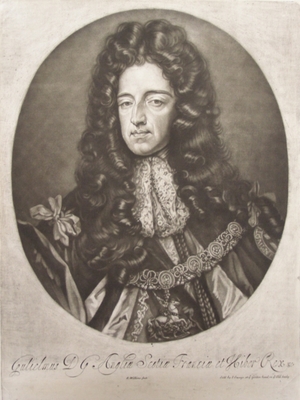
Formal portraits show us that in late-seventeenth century Europe men were wearing their hair long. By the era of the American Revolution hair had become shorter. (Another article may appear talking in general terms about changes in fashion during the Penns’ era.) Wigs were popular in both periods. Male fashions were set by royalty.  Monarchs had expectations for visitors’ appearance. They seemed to have wanted to control the pleasing visual aspect of life at court. During William Penn’s time men were encouraged to wear luxurious wigs; quite long wigs became the fad. Some extended below shoulder-length. [The wig that our stand could support would reach my waistband!] As an example, take a look at the King’s portrait in the Great Hall. Co-incidentally, Charles II and William Penn were balding. As a small child Penn contracted smallpox and was left with partial hair loss.

As Philadelphia developed at a very rapid pace, many tradesman and artisans set up shop to take advantage of the growth. The city soon acquired a wood turner (who was also a saddler) named Henry Furnis who set up shop in one of the caves along the river. Penn wanted folks out of them – and quick! We have correspondence between Penn and Furnis in which we see that the shopkeeper was offered rental space owned by the proprietor. Mr. Furnis felt this to be an inconvenience because he needed to be near woodlands to acquire materials for his trade. Think about the last time you saw a wig stand. Likely it was made of plastic or Styrofoam – and NOT turned! My how times have changed…

You can now see that we can use objects to make deeper connections to the past for visitors. With a simple wig stand we can tell the story of changes in fashion, expanding empires, and even employment among tradesmen. Oh, and shopping! Hhhmmm, do you think we should offer wig stands in our Gift Shop?


By Jim Cawley

Virtual Museum Visits

It’s amazing how fast the Internet is making museums and historic sites more accessible every day!  Now everyday people can visit some of the world’s top art museums without the expense of a plane ticket, thanks to Google’s Art Project ( http://www.googleartproject.com/ ).  Not only do they provide a detailed look at the museums’ collections, but they manage to present a 360˚ tour of the actual galleries! 

Imagine families, classrooms, and home-bound seniors being able to walk through the Palace of Versailles in France or the State Hermitage Museum in St. Petersburg, Russia! In my opinion, experiencing the paintings, sculptures, furnishings, and other decor in their actual settings, even in a virtual setting, makes them more real and impressive than looking at a photograph. 

Of course, this will never replace the sense of awe and history that can only come from ACTUALLY being in Versailles… but for people limited by their location, finances, and health, it could open up a whole new world.  This large project could be only the beginning of museum and historic site access online! 

What do you think?  Could you one day see Pennsbury Manor offering a virtual tour of the buildings and grounds for those who cannot make the trip? Please share your thoughts in the comments section below!

January Collections Featurette

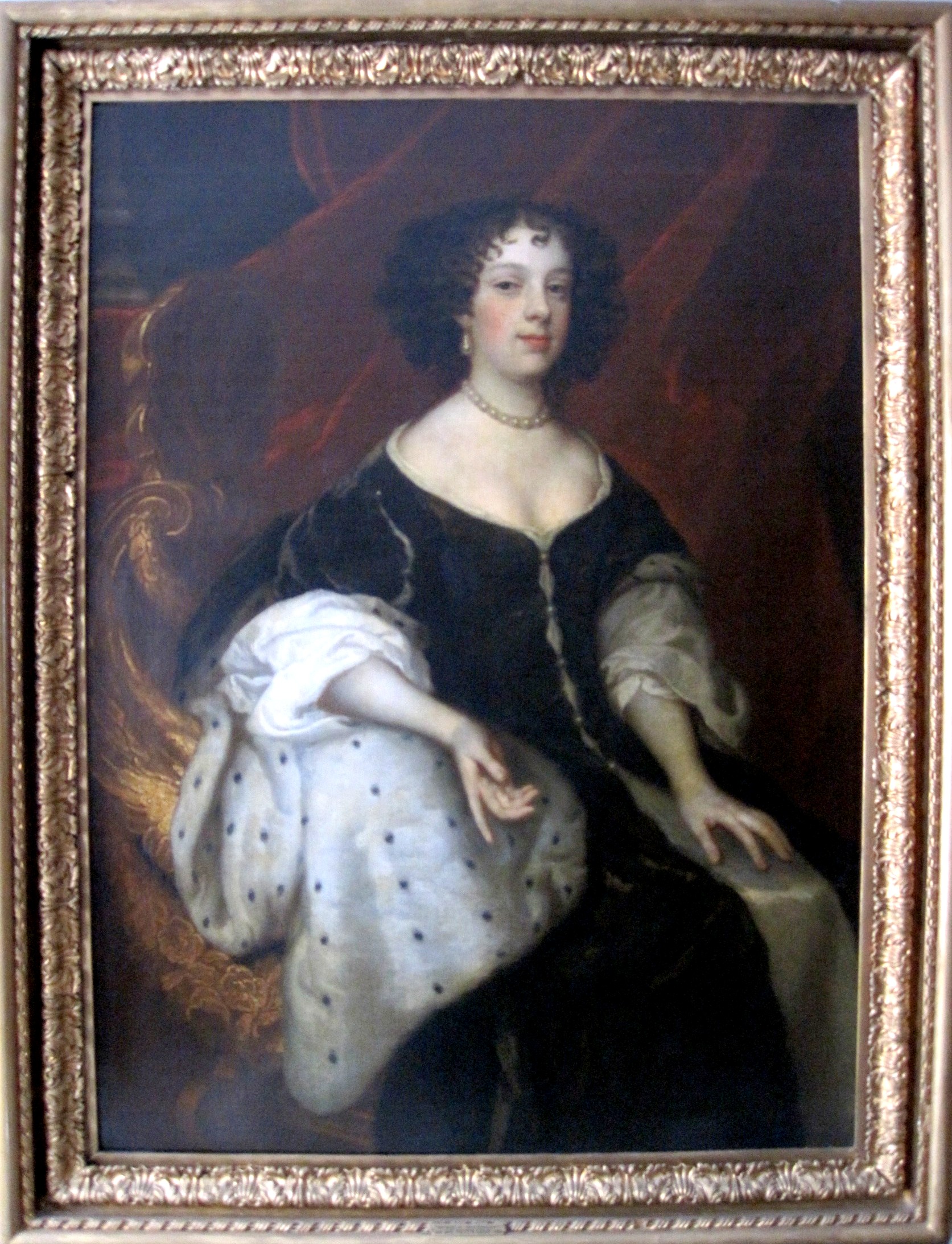
Portrait of Catherine of Braganza

I’ve always loved the portrait of Queen Catherine by Peter Lely in the great hall.  The dignity and serene expression of her face and the sumptuous clothing suggest a Queen who is leading a life of luxury and position. Nothing could be further from the truth!  Poor Catherine had a difficult life filled with disappointment and ridicule.  Yet she rose above it all and is seen by historians as a valiant and resilient woman.

Catherine of Branganza was born in 1638, the daughter of the King of Portugal.  At the time, Portugal was a poor nation living in the shadow of Spain.  Because an alliance with England would bolster Portugal’s security, they began marriage negotiations between Catherine and England’s future King Charles II when she was a child.  The English Civil War and subsequent reign of Proprietor Cornwell put these plans on hold, but negotiations resumed with restoration of Charles and they were married in 1662. 

From the beginning, there were problems with the union.  Catherine had been raised in a convent and was deeply religious.  (The terms of her marriage included freedom to practice her Catholic faith without persecution.)  Charles, on the other hand, was famously known as one of the most “immoderate” of monarchs.  Catherine was horrified by the debauchery of court.  Right away, Catherine was forced to face the power and influence of her husband’s mistresses.  Lady Castlemaine, the King’s chief mistress, was to serve the new Queen as a “Lady of the Bedchamber,” giving Castlemaine free access to the Queen in all parts of her life.  The ensuing battle between the royal couple lasted several months and was extremely heated.  One witness in court recorded a confrontation between the pair, and “the passion and noise of the night reached too many ears to be a secret the next day; and the whole Court was full of that, which ought to have been known to nobody.”

Eventually, the Queen relented in the face of the increasingly pressure from the King.  Some historians maintain that she conceded only because Portugal needed more assistance from England.  Whatever friends the Queen had at court abandoned her, understanding that the Queen had no influence with the King.  Adding to her humiliation was her inability to produce an heir to the throne.  Yet Catherine had reason to hope that there was some affection on the part of her husband.  Samuel Pepys writes of seeing the King and Queen at an informal gathering, and he recounts a merry bantering between the two – although Castlemaine was also noted as being present.  Even in later years, witnesses report the King’s great affection for Catherine.  Throughout his reign, the King steadfastly refused all suggestions to divorce his wife, and he protected her against accusations of her alleged participation in treasonous plots.  In the fall of 1663, Catherine fell gravely ill.  As she lay dying, the distraught King attended to her and begged her to live “for his sake.”  The Queen complied and began to recover.  As she became stronger, her husband lost interest and returned to his mistresses.

After Charles II died, Catherine remained in England for several years.  She returned to Portugal in 1692 and, at age 66, acted as regent (ruling monarch) for her brother.  As regent, she gained several successes over the Spanish.  She died a wealthy and popular woman.  But the legacy of her bitter years will always follow her and can be seen even today at Pennsbury.  Look closely at the plaque on her portrait.  The Queen’s portrait is identified as the Duchess of Portsmouth – one of Charles’ most famous mistresses.


by Mary Ellyn Kunz

We Have a Winner!

The lucky winner of our Blog Subscription drawing is… drumroll please!…. SHIRLEY BRILLIANT!  Congratulations, Shirley!  You have won a glass vase with haindpainted peacock feathers and filled with M&Ms! 

Thanks again to everyone who has subscribed, I look forward to a New Year filled with new ideas, research, photos, and feedback from you!  Please feel free to share your opinions in the comments section of each post.  If you want to suggest a featurette topic or related website link, I’d love to hear it!

Subscription Prize Revealed!

When I get back from our Longwood gardens trip on January 3rd, I will be putting all our volunteer blog subscriber’s names into a drawing for this…..

Hand-Painted Peacock Feather Vase

(filled with holiday M&M’s!)

Thanks again for participating in Pennsbury’s Volunteer Blog.  Please feel free to share your thoughts and ideas in our Comments Section, located below each post.  Also, if you have any ideas for new topics for our featurettes or interesting links you’d like to post, please email me at c-hahoward@state.pa.us!

December Collections Featurette

As a special Holiday treat, we are changing up our usual routine! Instead of featuring an artifact from our collections, the staff would like to feature a special document: Peter Kalm’s Travels in North America, published in 1749. Kalm included a description of Quaker Christmas celebrations in the mid-18th century, about 48 years after Penn left the colony:

“Today Christmas Day was celebrated in the city, but not with such reverence as it is in old Sweden. On the evening before, the bells of the English Church rang for a long time to announce the approaching Yuletide. In the morning guns were fired off in various parts of the town.

People went to church, much in the same manner as on ordinary Sundays, both before and after dinner. This took place in the English, Swedish, and German churches. The Quakers did not regard this day any more remarkable than other days. Stores were open, and anyone might sell or purchase what he wanted. But servants had a three-day vacation period…”

The holiday season is always special at Pennsbury Manor, as we aim to share the welcoming and generous spirit so important to William Penn. We hope you enjoyed our Holly Nights event, which was a smashing success! The staff at Pennsbury wish you a very happy holiday season and hope to see you again in the new year!

Daphne Birthday Social Post